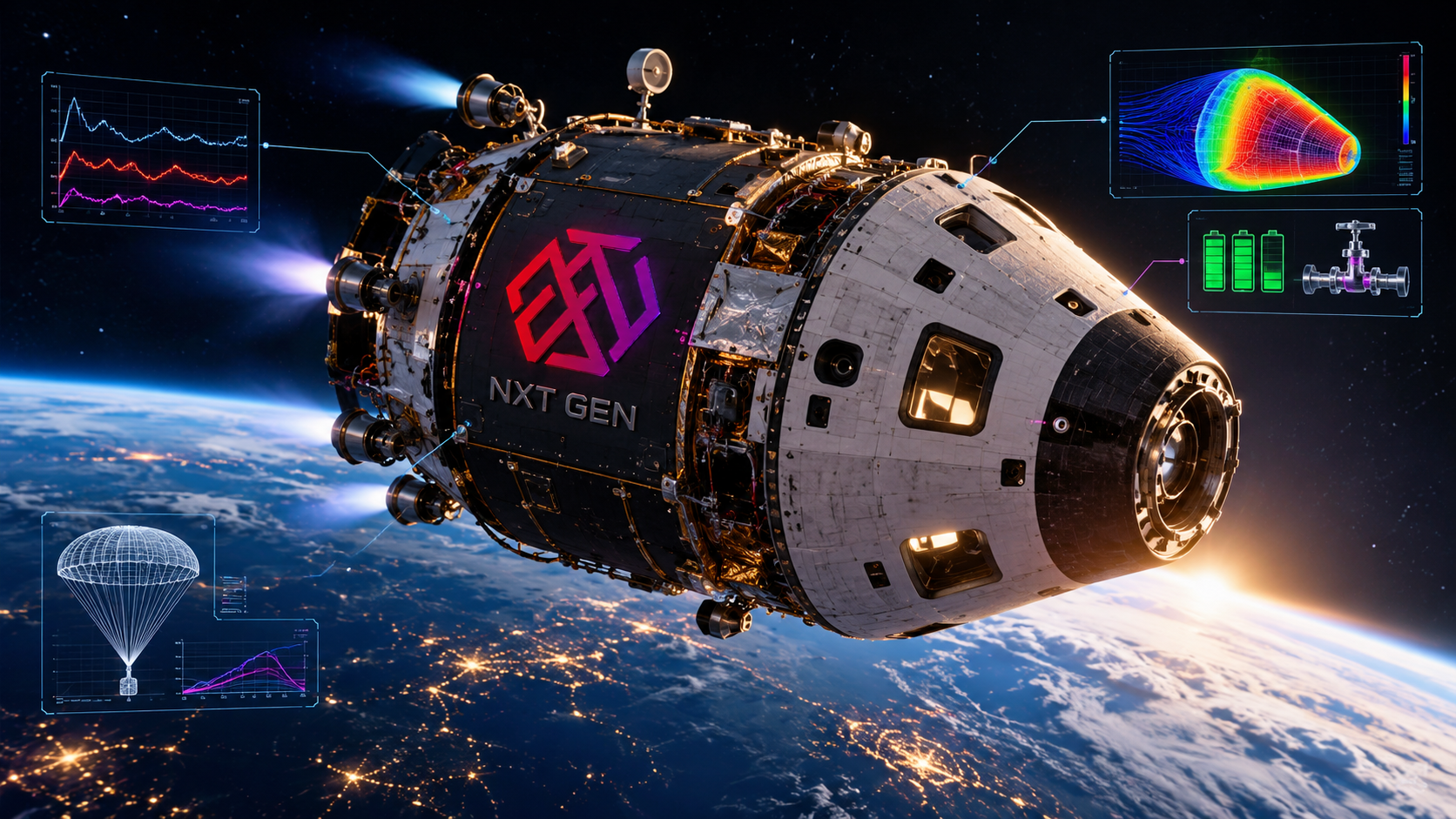
The next mission is designed to produce evidence
NASA and Boeing announced an updated Starliner development plan on September 28. The next mission, Starliner-1, is planned as an uncrewed cargo flight to the International Space Station in December 2026 or January 2027. NASA describes it as an engineering evaluation mission intended to verify the spacecraft’s thermal environment, collect qualification data, and identify remaining risk before another crewed flight.
The current plan targets Starliner-2 for a crewed mission by 2028. NASA also intends to exercise options for a fifth and sixth Starliner flight and work with Boeing and United Launch Alliance to certify the Vulcan rocket after the Atlas V completes its final flight.
Corrective work reaches beyond one component
NASA’s investigation into the 2024 Crew Flight Test produced 61 recommendations covering technical, organizational, and programmatic issues. The agency linked the service-module thruster problems to a combination of thermal conditions and design features that caused the reaction-control thrusters to operate outside their engineering qualification.
Boeing has made thermal modifications to the service module for evaluation on Starliner-1. NASA and Boeing also selected an additional thruster-valve design change intended to address poppet-seal extrusion and its effect on thruster performance. Other planned improvements include new crew-module thrusters, batteries, and parachute modifications.
The important point is that return to flight is not framed as a single repair. It is a controlled sequence of configuration changes, targeted demonstrations, operational limits, data collection, and certification work across the integrated spacecraft.
Uncrewed testing creates room to learn
Sending cargo without astronauts allows teams to exercise the complete vehicle in its real operating environment while controlling human risk. Ground tests can reproduce many conditions, but an orbital mission exposes the thermal cycles, propulsion interactions, software, communications, docking operations, and mission decisions that must work together.
The flight will not prove that every future risk is eliminated. It should reduce uncertainty and provide evidence for the next certification decision. That distinction matters in safety-critical engineering: a test is valuable when its objectives, instrumentation, acceptance criteria, and decision path are defined before the result is known.
The organizational lesson is staged re-entry
Organizations outside aerospace face similar questions after a serious failure or high-risk change. A disciplined return should begin with an agreed root-cause record and a controlled configuration. Each corrective action should have an owner, a verification method, and evidence linked to the risk it addresses.
Next, test the integrated system under representative conditions rather than validating components in isolation. Set operational constraints for the first return, collect data that can challenge assumptions, and require an explicit review before expanding scope. Recovery is complete when the organization can explain why the system is safer—not merely when it is running again.
Starliner-1 will therefore be more than a cargo mission. It is a decision gate: an opportunity to turn corrective work into flight evidence before human spaceflight resumes.