Separate the operating program from the experiment
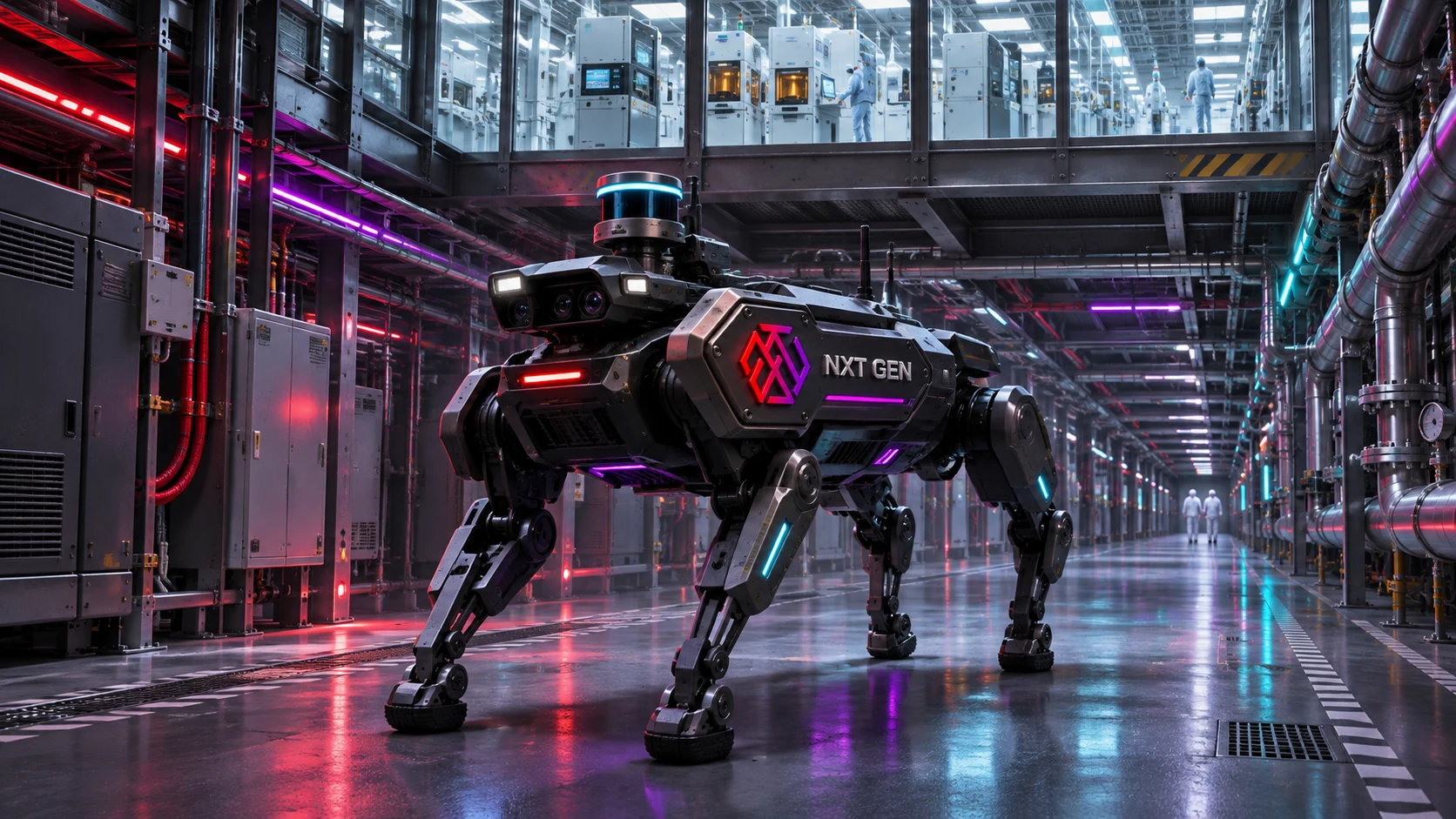
GlobalFoundries and Boston Dynamics announced on November 17 that Spot inspection deployments will expand across sites in the United States, Germany, and Singapore. They also plan to test Atlas at GlobalFoundries facilities in early 2027. Those are different maturity levels: an inspection program is expanding, while humanoid use cases are still to be evaluated.
Read the numbers with their context
The companies report that two Spot robots in Singapore completed more than 90,000 sub-fab inspections since April, with a 99% mission success rate. These are company-reported figures, not an independent comparison. A buyer should ask how a mission is defined, which failures are excluded, and how often people intervene.
Make an inspection lead to a decision
A mobile camera or sensor creates value when its observations reach maintenance staff in a usable form. For an organization considering this approach, our suggested pilot starts with a small route, a repeatable measurement, and an agreed escalation threshold. Record missed observations, false alarms, maintenance actions, and time spent recovering the robot.
Give the next robot a fresh acceptance test
Atlas testing will examine possible tasks, integration requirements, and customer readiness. Success with inspection does not establish that a humanoid can safely manipulate equipment in the same facility. Define a bounded task, safe stop conditions, human handoffs, and measurable benefit before expanding. Keep worker training and exception recovery in the operating plan from the beginning.