Vision becomes part of the control system
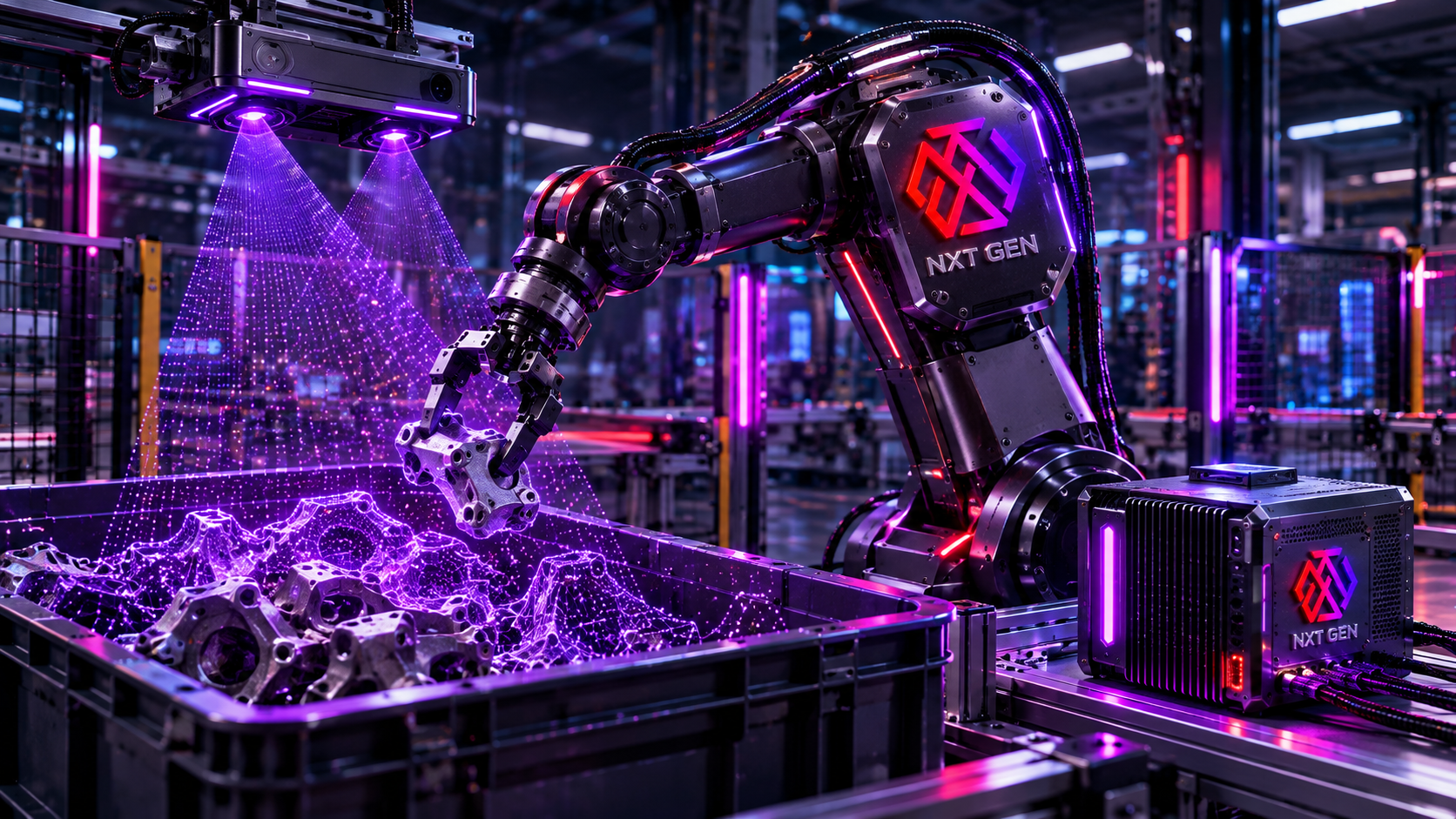
On October 8, 2026, KUKA described iiQKA.AI Vision, its integrated software for 2D and 3D industrial image processing. Announced applications include bin picking, assembly, quality control, and depalletizing. The architecture runs image processing within the robot controller on KUKA’s AI Extension Platform, using an NVIDIA Jetson Orin module.
KUKA says the solution does not require a separate industrial computer or a cloud connection for image processing. Images are processed and stored locally. These are vendor descriptions of the architecture, not an independent guarantee of performance or security in every installation.
From an image to a useful motion
The product documentation describes a workflow that locates components from images or 3D point clouds, calculates positioning and gripping information, and passes those results to the robot. Configuration takes place in iiQWorks through visual workflows and templates, with camera setup, calibration, training, and commissioning in the engineering process.
KUKA distinguishes relatively structured 2D tasks from applications needing depth and orientation, such as scattered parts or mixed stacks. That is a helpful design question for any project: choose the sensing method required by the task rather than adding complexity because it is available.
Simpler architecture changes the maintenance problem
Bringing vision and motion closer together can reduce the number of interfaces an integrator must coordinate. It can also make the controller a more important maintenance boundary. Teams should know how camera settings, vision models, robot programs, and controller software are versioned and restored as a compatible set.
Local processing reduces dependence on a remote inference service, but it does not eliminate network management or cybersecurity. Engineering access, configuration backups, supported updates, and recovery procedures still belong in the deployment plan. A system should have a defined safe response when the camera cannot identify a part confidently.
Validate the difficult cases first
A useful pilot should include the work that challenges perception: reflective surfaces, partial occlusion, unfamiliar orientations, changing illumination, and nearly empty bins. Define an acceptance rate, allowable false detections, cycle time, and manual recovery procedure before running the trial.
Evaluate the completed cell with its real gripper, parts, lighting, and safety controls. Include operators and maintenance staff in the review so that clearing a fault does not depend on one specialist. Compare the full operating burden with the current process, including calibration and changeovers.
For organizations adopting robotics, this development points toward more integrated edge AI. The business case still rests on repeatable output, recoverable failures, and a team that can support the system after commissioning.