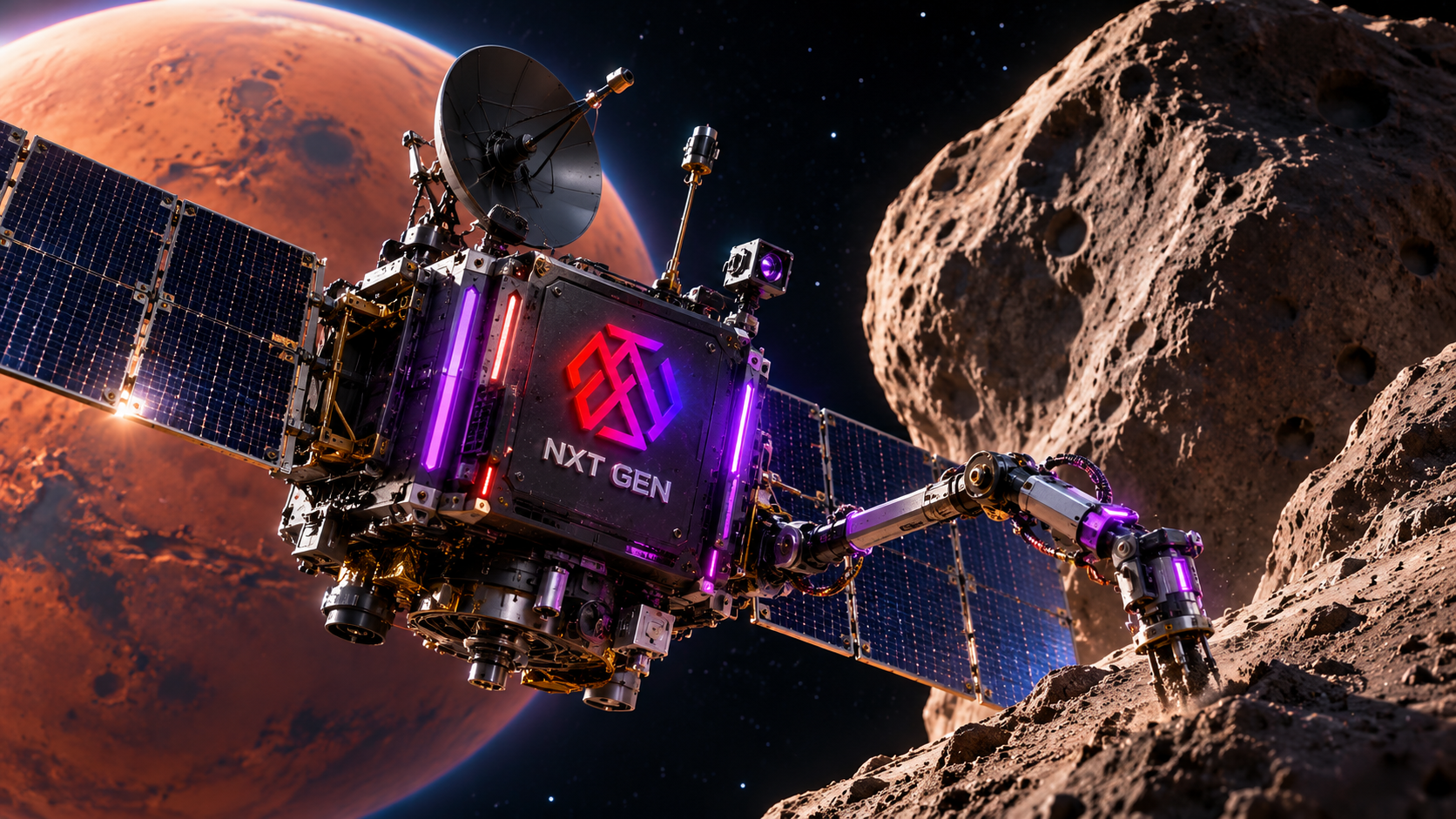
The question behind the mission
In an October 15, 2026, update, NASA outlined its contribution to JAXA’s Martian Moons eXploration mission, MMX. The mission aims to investigate Phobos and Deimos and return material from Phobos to Earth.
Researchers want to establish whether the moons formed from debris after an impact on Mars or began as captured asteroids. The article describes mission plans; this report does not claim that a launch, sample collection, or return has already succeeded.
Different instruments answer different questions
NASA’s MEGANE instrument will use gamma-ray and neutron measurements to investigate elemental composition. A pneumatic sampler will use nitrogen gas to collect surface material, complementing JAXA’s coring sampler. NASA also contributes communications and navigation support through the Deep Space Network.
These approaches connect remote measurements with physical material. Understanding that relationship matters: a returned sample becomes more informative when its location, surroundings, and collection process are also documented.
Collection is the start of a longer evidence chain
NASA plans to curate approximately 15 percent of the returned material for research. A sample-return mission therefore has responsibilities extending well beyond acquisition: the material must remain identifiable, interpretable, and useful for later investigation.
For engineering teams, our interpretation is that custody and context should be designed alongside the hardware. Record what was measured, which configuration produced it, and what happened between collection and analysis. Otherwise, an impressive measurement can become difficult to compare or reproduce.
A useful lesson for advanced engineering
Organizations developing aerospace instruments or other complex systems can apply the same discipline to terrestrial testing. Define the question first, select complementary measurements, and preserve the link between each result and the tested item.
Include data formats, calibration records, access, and long-term stewardship in the design review. Plan how another team will interpret the evidence after the original engineers move on. MMX’s scientific goal is specific to Mars’ moons; the broader value is a process that keeps valuable evidence usable for years.