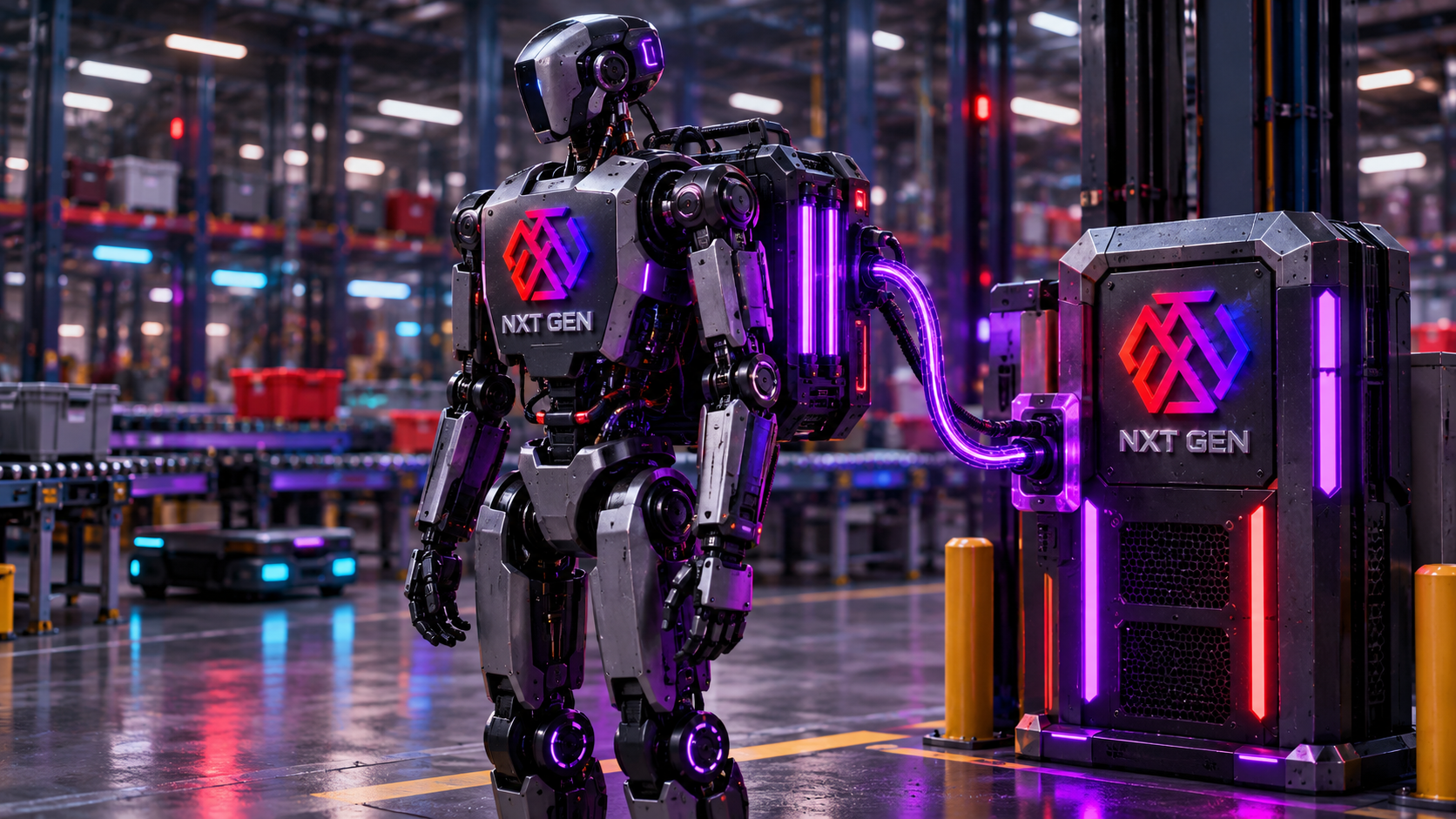
Battery strategy moves into the business case
On October 15, 2026, Agility Robotics named Nyobolt its ultra-fast charging battery technology partner for Digit 5. The announced targets are 90 minutes of runtime and a nine-minute recharge. Agility says the system could enable more than 20 hours of work per day; these are company expectations, not independently verified fleet results.
Early access is expected in the first half of 2027. The announcement concerns a forthcoming configuration, rather than evidence that these operating figures are already standard across deployed fleets.
A fast charge is one part of a shift
For an operator, the relevant measure is useful work completed over the entire operating window. Charging time sits alongside travel to the dock, waiting for access, task changes, faults, and planned maintenance. Improving one component can reveal a different constraint elsewhere.
Our operational reading is that charging should be modeled as a shared production resource. Multiple robots can compete for the same dock or electrical capacity. A pilot should include those interactions instead of extrapolating from one uninterrupted demonstration.
Test the infrastructure as well as the robot
Before procurement, ask the supplier to define the workload, payload, environment, and battery condition behind a runtime claim. Request charging requirements, battery service procedures, and the expected effect of aging on performance. Agree on the evidence that will count as acceptance.
Then test a representative shift with the actual material flow and site procedures. Measure completed tasks, energy use, dock waiting, manual interventions, and recovery time. Include facilities and safety personnel early so that electrical installation and maintenance access are part of the plan.
Buy an operating outcome
Faster charging could make a smaller fleet more useful, but the benefit depends on the full system. Compare total operating effort with the existing process, including supervision, maintenance, and downtime. Avoid treating a charging ratio as a return-on-investment calculation.
For organizations exploring humanoids, this development is a reminder to scrutinize the less visible infrastructure. A capable robot needs a dependable route back to productive work whenever its battery, task, or environment interrupts the shift.