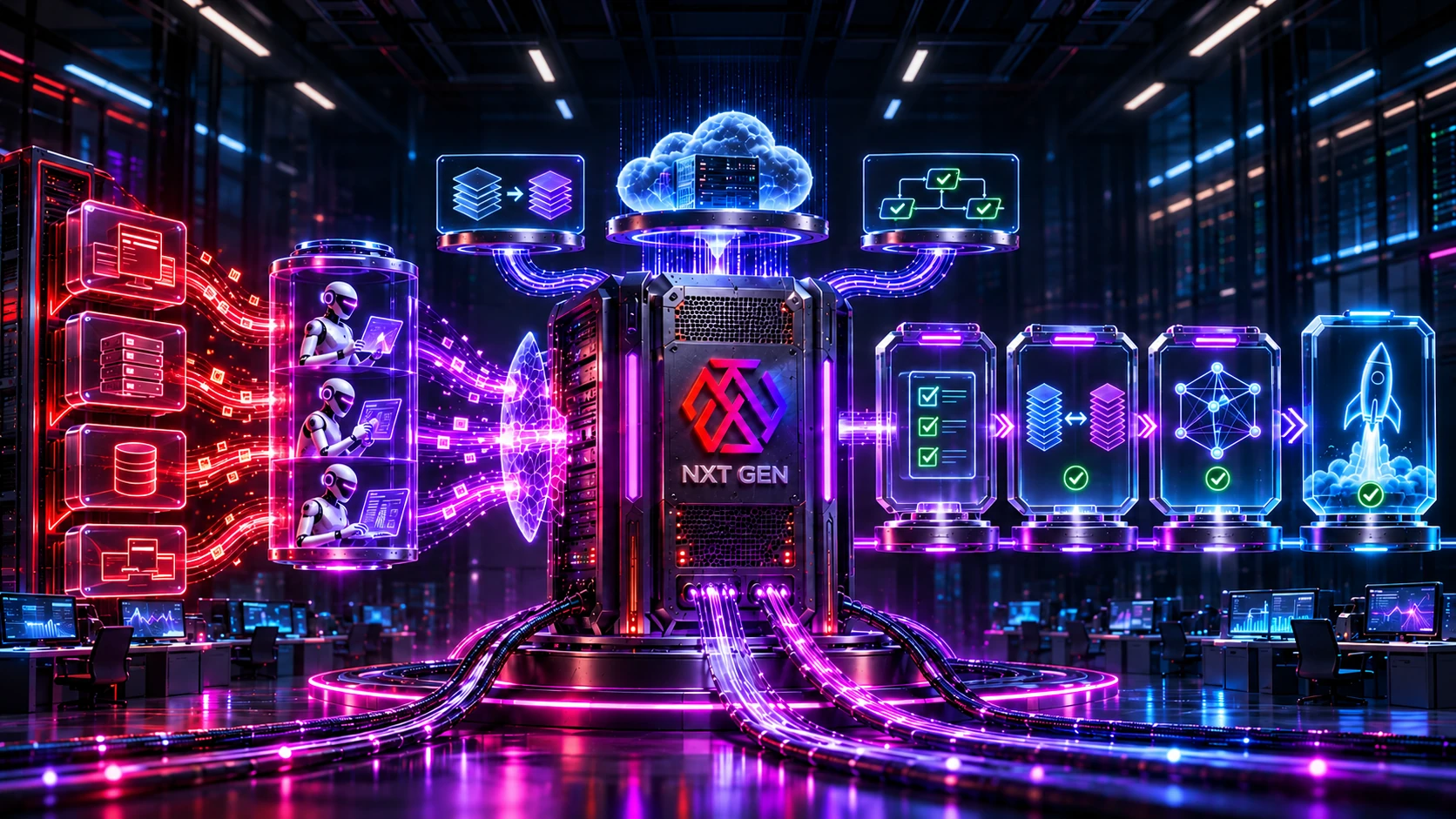
Agents move from suggestions to large migrations
On October 26, Microsoft described using AI agents for large-scale code migration and language modernization across major codebases. The company points to work involving a roughly 400-million-line toolchain and says its teams have combined agents with static analysis, testing, and formal verification since 2024.
Those are Microsoft’s reported engineering experiences, not a guarantee that every organization can automate a migration at the same scale. The useful signal is that code generation is becoming only one stage in a broader evidence pipeline.
Approve reusable knowledge, not thousands of edits
The described operating model has agents propose and score migration knowledge, while experts review that knowledge before it is applied repeatedly. That moves scarce reviewer attention toward rules, patterns, and exceptions instead of asking people to inspect every mechanical change from scratch.
A team adopting this approach should make the knowledge base versioned and reviewable. Each rule needs an owner, a defined scope, examples of correct and incorrect application, and a way to trace a generated change back to the rule that produced it.
Verification needs several independent layers
Microsoft highlights feature-by-feature modernization, differential testing against the old implementation, held-out tests, and formal specifications where the risk justifies them. Each layer answers a different question: did behaviour remain equivalent, does the new feature work, can the system handle unseen cases, and can a critical property be proven?
No single test suite can carry the whole decision. A strong migration plan combines automated checks with architecture review, security testing, performance evidence, staged rollout, telemetry, and a tested rollback path.
Start with a bounded, evidence-rich workflow
Choose a migration with clear boundaries and stable behaviour. Define acceptance criteria before the agent changes code, preserve a representative baseline, reserve tests the agent cannot see, and require human approval for exceptions and production release.
The organizational payoff is controlled throughput. AI can reduce repetitive conversion work, while the team keeps responsibility for the specification, evidence, deployment decision, and business outcome. Microsoft itself identifies trust in AI-generated specifications as an open problem, which is why independent validation remains essential.